

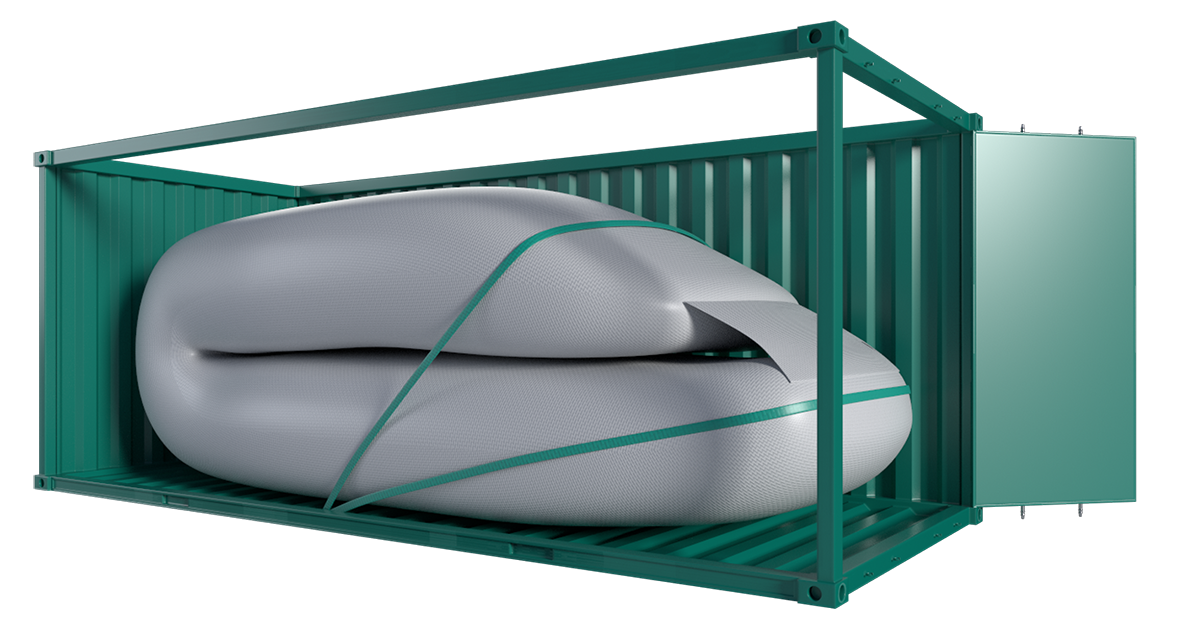
Over the years, flexitanks have increasingly been treated like a simple commodity — almost like a potato sack inside a container. Something you install, fill, ship, and forget.
But this perception is misleading.
A flexitank is not just a packaging solution. It is a process-driven system within bulk liquid transport, requiring control, planning, and discipline — especially when handling food & beverage aseptically.
In reality, successful flexitank logistics operations depend on proactive loading and discharge procedures. From correct installation and positioning to managing flow during filling, every step directly impacts performance.
This becomes even more critical with viscous liquids such as juices, oils, syrups, where the goal is not only transport — but efficient flexitank discharge with minimum residue.
Without proper planning, what seems simple can quickly result in product losses & operational delays.
Another commonly misunderstood aspect is flexitank recycling.
Flexitanks are often criticized as single-use products. In reality, they are easy and efficient to recycle. The real issue is not recyclability — it is traceability and operational control.
Without proper follow-up:
- used flexitanks may not enter the recycling stream
- environmental benefits are lost
- compliance becomes uncertain
Recycling is not just a feature.
It is part of flexitank operations.
When all elements are combined —flexitank loading, discharge efficiency, residue control, and recycling— it becomes clear that flexitank logistics is not a standalone product.
It requires a complete operational organization.
This is where LiquA makes the difference.
LiquA provides not just flexitanks, but a global flexitank logistics network, ensuring that every step —from loading to discharge and recycling— is properly managed.
Today, LiquA operates with its own companies in 10 countries and a network of agents in over 50 countries worldwide, including;
- Spain (HQ),
- Türkiye,
- New Zealand,
- Australia,
- Malaysia,
- Indonesia,
- Ukraine,
- Kenya,
- South Africa,
- Ivory Coast,
- Brazil.
In a market where flexitanks are treated as simple bags, the real difference lies in process control and global execution capability.
Because a flexitank is only as good as the system behind it.

