

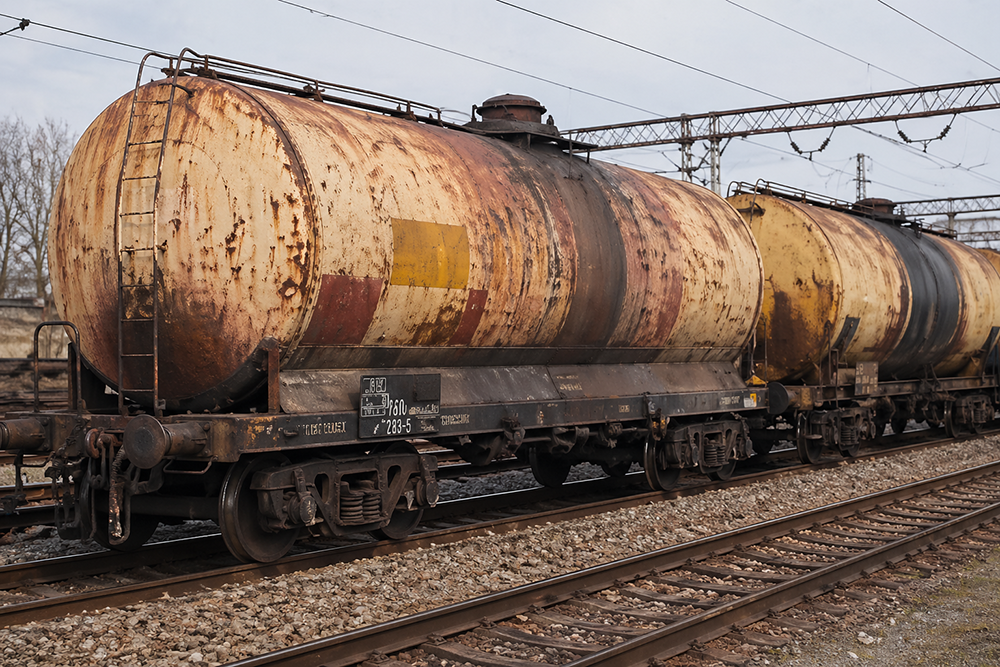
Rail tankers —also known as rail cisterns— have long been used for bulk liquid transport, including products like sunflower oil, olive oil, palm oil, soybean oil, linseed oil, and cottonseed oil.
But today, the real challenges are not accidents.
They are operational.
One of the biggest issues is contamination risk.
Rail tankers (cisterns) are reused for different cargoes. Even with cleaning, residue risk remains — especially critical when transporting food-grade oils such as sunflower oil, olive oil, or soybean oil.
And cleaning itself creates another layer of inefficiency:
• Time-consuming
• Costly
• Slows down operations
Every cleaning cycle reduces availability and increases cost.
Then comes the backhaul problem.
Rail cisterns are typically designed for specific cargo types. After delivering products like palm oil or linseed oil, finding a return load is often difficult.
• Many rail tankers return empty
Which means:
- higher logistics cost
- lower utilization
- inefficient supply chains
Flexibility is another major limitation.
Rail tanker (cistern) systems are rigid. Switching between sunflower oil, cottonseed oil, or other liquid cargoes is not always practical due to contamination and cleaning requirements.
In a market where supply conditions change rapidly, this lack of flexibility becomes a serious disadvantage.
There is also the issue of sloshing and structural stress.
Liquids moving inside a rigid cistern create dynamic forces:
- affecting stability
- increasing wear
- requiring frequent maintenance
• More downtime
• More inspections
• More hidden costs
Put all of this together, and the conclusion is clear:
Rail tanker (cistern) transport is not just a technical system.
• It is an efficiency bottleneck in modern bulk liquid logistics
This is exactly where flexitank logistics offers a smarter alternative.
Instead of reusable cisterns, flexitanks provide:
- contamination-free, single-use transport
- no cleaning requirements
- flexibility across different oils and liquid cargoes
- faster turnaround
And importantly:
• no empty return problem
LiquA takes this further.
The 27,000 L Jumbo Flexitank enables transport of sunflower oil, olive oil, palm oil, soybean oil, linseed oil, and cottonseed oil with:
• 12% more cargo per shipment compared to standard 24k L flexitanks
This directly means:
- fewer shipments
- lower cost per ton
- higher efficiency
And behind the product, there is a system.
With a presence in over 50 countries, LiquA ensures:
- correct installation
- controlled operations
- reliable performance
In today’s fast-changing supply chains, the question is not whether rail tankers (cisterns) work.
• The real question is: are they still efficient enough?
Because today, the smarter way to move liquid cargo is clear:
• LiquA Jumbo E-Flex flexitank — flexible, clean, and built for modern and efficient logistics.

