

Flexitanks are big bladders which are used for storing and carrying bulk liquids materials. With flexitanks, their design is customized to hold big amounts of liquid which can range up to 24,000 liters in most cases. There is also a patented flexitank design for 27,000 litres. A flexitank consists of polyethylene layers that ensure the required strength and elasticity. An outer layer consisting of woven polypropylene is then placed over this inner layer, which further increases the protection and longevity.


Despite the high capacity, it guarantees no bulging on the sidewalls.
The concept of flexitanks first emerged in the 1960s as a cheaper substitute for liquid bulk transportation. With years, flexitanks have undergone significant progress in their construction and materials. The objective has always been to maximize their longevity, reliability, as well as environmentally friendly. Rather than being just a more cost-effective option, flexitanks now become a favourite choice for many companies because they are versatile and efficient.

heats 20 times faster than any other alternative.
There are different designs for flexitanks to be used in standard 20’ shipping containers, 40’ containers, 53’ containers, 20’ reefer containers, 40’ reefer containers, European standard tented trucks, reefer trucks, North American 53’ dry vans and 53’ reefer vans. There is also a differentiation depending on capacity; specific manufacturers are specialized on higher capacity flexitanks. These flexitanks all have different specifications and designs according to the container or truck they are used. Using a flexitank designed for another purpose would cause major problems, potential leakages during transit. It is also advised to use the flexitanks from specialized manufacturers for the purpose. Sometimes, low cost “do it all” manufacturers might look like a good solution, ending up with costly problems during transit.


Versatility of flexitanks has led to their application in many industries. In the food industry they are employed to carry edible oils and wine to ensure the product does not get contaminated and reaches the consumer safely. Flexitanks are used in the agricultural industry to transport fertilizers. The same way, the chemical industry applies them in the transportation of non-hazardous chemicals. The capacity to carry a wide range of liquid products is the defining benefit of the solution in these industries.
Loading and discharging of flexitanks should be performed under the best practices to prevent contamination and ensure safety. This method requires trained workers. The flexitank should be correctly placed and well-secured in the container in order to prevent any issues during intermodal movement or any other movement. It is critical to make sure that the flexitank is clean and that there are no sharp objects that could damage the flexitank. Following the instructions and receiving training from the manufacturer of each flexitank is paramount.
After loading, the flexitank should be closed properly. Equally, when unloading, attention should be given not to allow any spill or contamination.
The choice of the flexitank needs to be made while taking into account a number of factors. Some of the factors include the nature of the liquid to be transported, the quantity of the liquid, temperature conditions, and the regulations of the origin and destination countriesy.
The price of a flexitank can vary significantly according to its type size, the producer and the location where it needs to be positioned. So, it is recommended to communicate with the suppliers to have the correct pricing information. Other issues to consider while evaluating the general cost are quality, brand reputation, max capacity, installation, maintenance, speed of heating system where applicable, disposal and expected reaction of the manufacturer in case of a leakage for any reason.
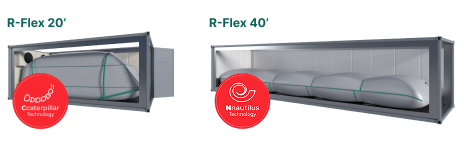
Flexitanks come with a whole array of advantages making it a number one choice for many businesses. One of their prominent benefits is cost efficiency. Since they can carry a large amount of liquid, which is up to 27,000 liters, they reduce the number of required containers, resulting in reduction of transportation costs. They are also user-friendly and consume less labor during installation, thereby minimizing operational costs.
Flexitanks are constructed to deliver safety and security, providing an airtight closure to add another safety layer which protects the product from any outside contaminants, guaranteeing the integrity and purity of the liquid product. With their high payload, they not only get the most out of the fuel but are also suitable for large scale operations.
With regard to environmental impact, flexitanks reduce the waste by the fact that single-use flexitanks can be recycled, and multiuse storage flexitanks can be used multiple times before disposal. They are also intermodal, that is, they can be used on different modes of transport; road, rail or sea.
Flexitanks’ future seems positive as new materials technology as well as innovative designs will probably enhance durability and environmental sustainability. Innovations are likely to result in the emergence of more durable and hardier flexitanks that could function well under severe conditions, and with greater lifespan.
Another innovation is the reduction on the carbon footprint of flexitanks by elimination of rigid bulkheads made by materials such as steel bars, mdf etc. One of the manufacturers in the industry has achieved that goal.